
This article contains affiliate links. If you buy throughthese links, I may earn a small commission at no extra costto you. I only recommend products I personally use and trust.
Every Sunday I spend 2 to 3 hours in my kitchen, making my cheap meal prep, and the rest of the week runs on autopilot. By Sunday evening I have five lunches portioned into glass containers, five evening snacks ready to grab, and the satisfying knowledge that I won’t be making a single food decision under stress for the next six days.
This is what cheap meal prep actually looks like in practice — not the Pinterest version with twenty matching containers and color-coded tape, but the real version that fits into a normal life and saves real money. I started doing it two years ago after I noticed I was spending $200+ a month on takeout I didn’t even enjoy. Today my entire weekly food bill comes in around $20, and I eat better than most people I know who spend three times that.
This guide is the system, step by step, exactly as I do it. No fluff. No motivational nonsense. Just what’s on my counter, what’s in my fridge, and what runs through my head between 11 a.m. and 2 p.m. on a Sunday.
Why Cheap Meal Prep Beats Every Other Food Habit
Most people think of meal prep as a time-saving strategy. It is — but the financial benefits are even bigger and they show up faster. According to the U.S. Bureau of Labor Statistics’ Consumer Expenditure Survey, the average American household spends close to half of its total food budget
on meals away from home — a quiet drain that adds up to thousands of dollars a year. The math is unforgiving: in any major city, a single takeout lunch easily costs $8 to $15. Buying lunch out five days a week is $40 to $75 just for one meal. A family of four ordering delivery a few times a week burns through $200+ a month without anyone even noticing.
Compare that to a Sunday-prepped week of real food: in my case, around $20 in groceries covers all three meals plus snacks for the entire week. Per meal, that’s well under $2. Over a year, the difference between my system and my old one is roughly $2,000 in savings — not a rounding error, not a small win, but enough money to take a real vacation or fund a small emergency.
The financial side gets the headlines, but the bigger benefit is mental. When you don’t have a plan, you make food decisions while hungry, tired, or rushed. Those are the three worst states for spending wisely or eating well. Cheap meal prep removes those decisions entirely: by Wednesday evening, I’m not deciding between cooking and ordering. The decision was made Sunday morning. The Wednesday version of me just opens a container and presses 3 minutes on the microwave.
There’s also a third benefit nobody talks about: meal prep teaches you to cook faster than any other approach. When you batch-cook the same proteins, grains, and vegetables every week, you repeat the techniques constantly, and within a month or two you’ll find yourself executing in half the time you started with. I used to take 4 hours on a Sunday. Now I’m done in 2.
My Sunday in the Kitchen, Step by Step
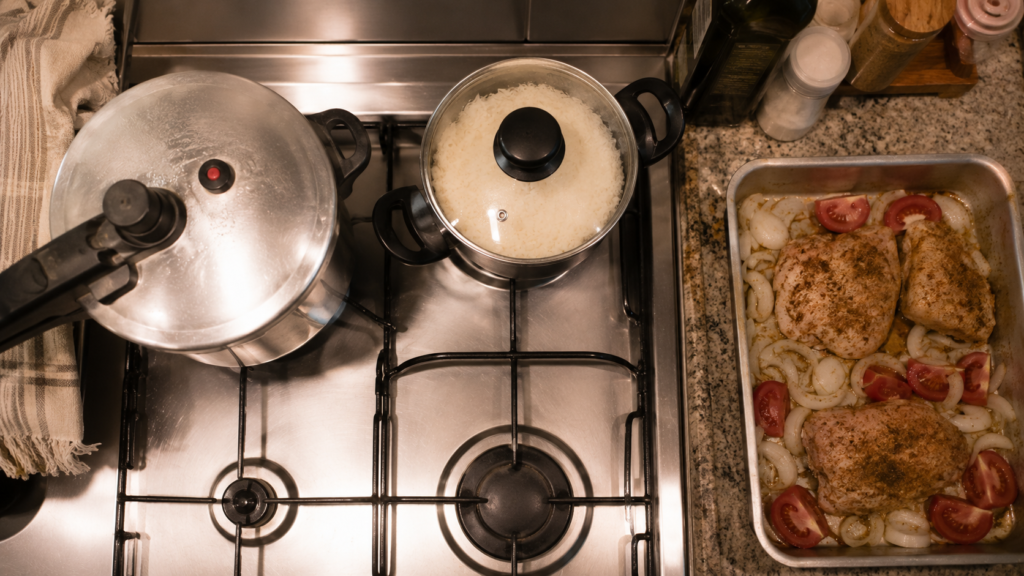
This is the actual sequence I follow, week in and week out. Yours might end up different — but the principles will probably stay the same.
11:00 — The grocery run
Sunday starts at the market. I always shop on Sunday morning, both because the produce is freshest and because going on a different day breaks the rhythm. My list is written the night before based on what I’m planning to cook, so the trip itself takes about 30 minutes. In and out.
11:30 — The slow stuff goes on first
The single most important habit in cheap meal prep is starting with the longest cooking processes first. The moment I’m back home, three things go on simultaneously:
- The beans in the pressure cooker (about 25 minutes from cold start)
- The chicken seasoned and into the oven (35-40 minutes)
- A tray of vegetables chopped and roasting in the oven alongside (35-40 minutes)
While these three are running, I have about 30 to 40 minutes of hands-off time. That time is gold.
11:45 — Music goes on, the parallel work begins
This is the unglamorous secret of why my Sunday prep doesn’t feel like work: I don’t treat it like work. Some weeks I put on an upbeat playlist with a Sunday energy — something I’d want to hear at a casual lunch with friends. Other weeks I queue up a podcast or a long-form interview I’ve been wanting to listen to. The music or audio shifts the kitchen from “task” to “ritual.” Two hours flies by.
While the slow stuff is in the oven and pressure cooker, I do the fast tasks:
- Cook the rice (12-15 minutes)
- Wash and chop salad ingredients (lettuce, tomato, cucumber, carrot)
- Wash the fruit I’ll be eating between meals
- Boil eggs for the snack containers
- Wipe down counter as I go so the cleanup at the end is small
The goal is for everything to finish within a 10-minute window of each other, so I can portion straight from cooking to containers without anything sitting around losing heat or texture.
12:30 — Portioning into containers
By the time the chicken is out of the oven and the beans are off the pressure cooker, the rice is done and the vegetables are roasted. Everything goes into containers in roughly the same balanced template:
- 5 lunch containers, each with a portion of chicken, rice, beans, and roasted vegetables
- 5 snack containers, each with something simple like boiled eggs, fruit, a slice of bread with cheese, or a small portion of leftover prep
Containers seal, go into the fridge or freezer (more on that below), and the system is built for the week.
13:30 — Done
Total time from market to finished prep: 2 to 3 hours. I do this every Sunday. Every single week.
The Containers and Tools That Actually Make It Work
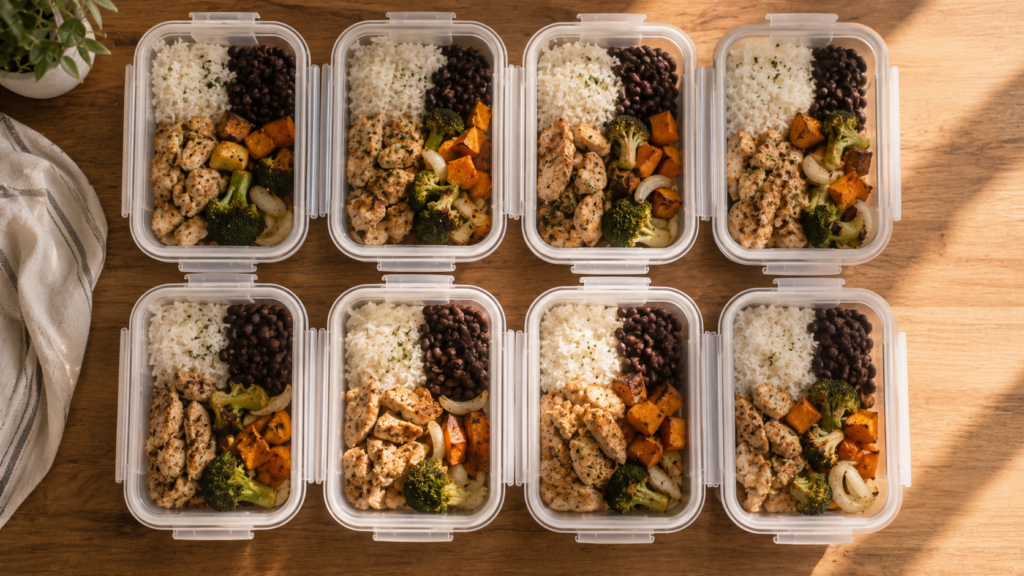
You don’t need a lot of equipment for cheap meal prep, and you definitely don’t need anything expensive. But the right basic tools make the difference between meal prep that feels like a chore and meal prep that runs on rails.
Containers
I use glass containers with snap-lock plastic lids. They’re more durable than plastic, they don’t absorb odors, they’re microwave-safe, and they don’t release chemicals when reheated. A set of 8 to 10 of them is plenty for a one-person prep system. They cost more upfront than plastic — I bought mine on a sale and it was probably the best $30 I ever spent on kitchen gear. They’ve lasted two years and counting.
For weekly storage, I split between fridge and freezer:
- Days 1-3 of the week stay in the fridge (Monday-Wednesday lunches)
- Days 4-5 go straight into the freezer on Sunday and move to the fridge on Wednesday night
This split is the underrated part of meal prep. Rice and chicken refrigerated for 4-5 days are technically safe, but the texture starts going downhill by day 4. Freezing solves that completely. By the time Thursday’s container thaws overnight in the fridge, it tastes like it was cooked yesterday.
Cooking equipment
The four tools that handle most of my prep:
- Pressure cooker — game-changer for beans. Dry beans take 90 minutes to simmer in a regular pot; in the pressure cooker, they’re done in 25. If you’re going to invest in one piece of equipment, this is it.
- Standard frying pan for fast proteins (eggs, quick-cooked fish)
- Two regular pots for rice and any soups or stews
- Air fryer for vegetables, chicken pieces, and reheating without making things soggy
A chef’s knife, a cutting board, and a pair of tongs round out the essentials. That’s the entire kit. No spiralizers, no specialty bakeware, no $200 stand mixer.
The Cheap Meal Prep Ingredients I Always Stock
These are the foundation ingredients that show up in nearly every weekly prep. Buying these regularly means you can build dozens of meals out of small variations on the same base.
Chicken breast. I’ll get into this in detail below — it’s the single most versatile and budget-friendly protein I cook with.
Dry beans (black or kidney). A bag of dry beans costs about $1.50 and yields 8-10 servings. Pressure cooker turns them into a week’s worth of protein-and-fiber base in under half an hour.
Rice (white or brown). Cheap, filling, freezes well, pairs with anything. A 2 kg bag at $2-3 lasts weeks.
Eggs. A dozen for under $3. Boiled for snacks, scrambled for breakfast, baked into a frittata for fast dinners.
Frozen vegetables. A bag of frozen mixed vegetables, broccoli, or spinach costs $1-2, has zero waste, and goes from freezer to plate in 6 minutes.
Canned tomatoes. The most underrated pantry staple. $0.60-1 per can. Turns rice and beans into a stew, becomes the base of a soup, or simmers down into a sauce. Always have 4-5 cans on hand.
Onions, garlic, and ginger. Cheap, last weeks in a cool pantry, and responsible for more flavor than any expensive seasoning blend.
Bread. Two or three plain rolls a week, used in fast snacks like bread with eggs, bread with cheese, or just toasted with whatever’s around.
Olive oil, salt, black pepper, basic spices (cumin, paprika, oregano). The foundation of seasoning.
That’s it. With those nine categories on hand, I can make dozens of different meals without ever needing to buy anything fancier.
My Weekly Chicken Routine (1 kg = 1 Week)
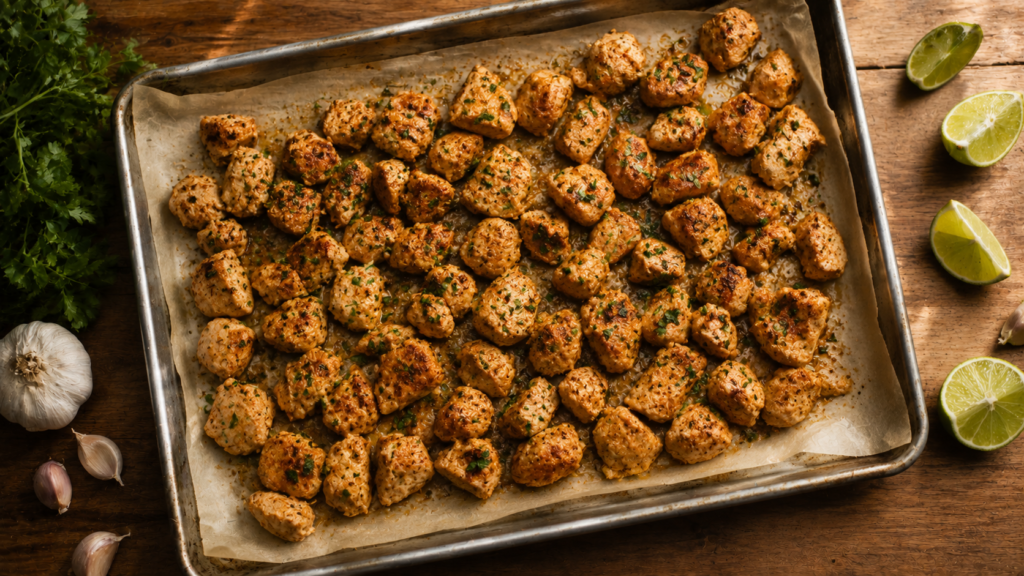
Every single week of meal prep includes chicken breast. I want to explain why, because I get asked this a lot.
Chicken breast is the workhorse protein of cheap meal prep, and it earns that role for three reasons:
1. It’s cheap. A kilogram of chicken breast in my local market costs about $5-6. That’s the cheapest non-vegetarian source of high-quality protein I have reliable access to. Eggs are a close second.
2. It’s versatile in seasoning. Plain cooked chicken absorbs whatever flavor profile you give it. Same kilogram of breast, four different weeks of meals: garlic and lemon one week, cumin and paprika another, soy and ginger another, simple salt and pepper for a fourth. The base is the same; the perceived meal is completely different.
3. It’s versatile in pairing. Chicken goes with rice, with potatoes, with pasta, with salad, with beans, with everything. There’s no other affordable protein that pairs as widely. Beef gets monotonous fast on a budget; fish is more delicate to handle and store; pork has a stronger flavor that limits combinations. Chicken is the diplomat of proteins.
4. It yields well for solo or small-household prep. One kilogram of chicken breast portioned into 5 lunches gives me about 200 g per meal — comfortable, satisfying, never excessive. That’s a full week of protein from a single roast.
My standard prep: cube the chicken, season generously with salt, garlic, paprika, and a squeeze of lime. Bake at 200°C for 30 minutes, or use the air fryer for 18 minutes if I’m in a hurry. Portion straight into containers as it cools.
If chicken thighs are cheaper at your market — they often are in the US and parts of Europe — they work just as well. The principle is the same: pick the cheap, versatile protein your local market favors and build the system around it.
If you’re combining this kind of cheap nutrition with rebuilding your overall fitness, my full guide to eating healthy on a budget goes deeper into the food side, and the home workout plan for beginners handles the training piece. Together they’re the two pillars of a budget-friendly body transformation.
Simple Meal Prep Recipes Under $2 a Serving
These are recipes I actually rotate through, week after week. Each one is in regular rotation because it’s cheap, fast, and easy to scale.
Roasted Chicken with Rice and Beans ($2.20 a serving — my staple)
The Brazilian-style plate I described above. Cooked rice, black beans simmered with garlic and a bay leaf, chicken breast cubed and roasted with garlic, paprika, salt, and lime. Salad assembled fresh in the morning before work. This makes 5 lunch containers. Total cost: about $11. Per serving: $2.20.
Spiced Red Lentil and Tomato Soup ($1 a serving — best for cold weeks)
Sauté one diced onion and four garlic cloves in olive oil. Add two teaspoons each of cumin and smoked paprika, one can of crushed tomatoes, one cup of dry red lentils, and four cups of broth. Simmer for 25 minutes. Salt, lemon juice, and parsley to finish. Six servings, freezes for up to three months. The cheapest serious meal in my rotation.
Egg and Vegetable Frittata ($0.70 a slice)
Whisk 8 eggs with salt and pepper. Add any frozen or fresh vegetables you have on hand. Pour into an oven-safe pan and bake at 190°C for 18 minutes. One frittata feeds 4-5 people and costs around $3 total. Excellent for breakfast prep, snack containers, or a fast dinner with bread and salad.
Bread with Scrambled Eggs ($0.40 — my emergency fast meal)
One bread roll halved. Two scrambled eggs with salt and black pepper piled on both halves. Five minutes from start to finish. This isn’t really a “prep” recipe, but it’s the meal I fall back on whenever the prep runs out, when I’m too tired to think, or when I want a fast, real breakfast without effort. It’s the safety net under the whole system.
Chickpea and Cabbage Stir-Fry ($1.20 a serving)
Half a head of shredded cabbage, a can of drained chickpeas, garlic, ginger, soy sauce, and rice vinegar — all stir-fried fast. Add frozen mixed vegetables in the last two minutes. Serve over rice. Holds up beautifully in the fridge for 4 days; flavors actually get better by day 2.
How to Scale Your Cheap Meal Prep Over Time
Starting with one prep session per week and four or five components is the right approach for absolute beginners. As cheap meal prep becomes a habit, here’s how to expand without adding stress.
Add a mid-week mini prep. Once your Sunday system is solid, a 20-30 minute Wednesday or Thursday session — fresh rice, a new sauce, freshly boiled eggs — bridges the gap to the weekend and prevents the late-week boredom that ruins many people’s first attempts at prep.
Build out your sauce repertoire. The single fastest way to make the same ingredients feel different across multiple meals is to change the sauce. A tahini-lemon dressing, a peanut-soy sauce, a tomato-garlic marinara, and a yogurt-herb sauce can be batch-made in advance and rotated. With four sauces and the same core components, you have effectively sixteen different meal experiences.
Introduce one new recipe per week. Every week, add one unfamiliar dish to your rotation. Over three months, you’ll have 12 recipes you can execute efficiently. Within six months, cheap meal prep stops feeling like a discipline and starts feeling like the way you naturally eat.
Batch and freeze for two-week planning. Once your weekly prep is automatic, start doubling batches of freezer-friendly dishes (soups, stews, frittatas) and building a frozen meal library. This creates a buffer for truly exhausted weeks when even a 90-minute prep isn’t going to happen.
The Mindset That Makes It Stick (Including the Cheat Day Strategy)
Here’s the part most cheap meal prep guides leave out, so I’ll be direct about it: you don’t need to follow this system 100% of the time, and you actually shouldn’t try to.
I’ll tell you what my real week looks like: about 5-6 days a week I eat the prep. The remaining day or two, I deliberately do something different. I’ll order delivery on a Friday because I want a specific dish I can’t easily cook. I’ll go to a restaurant on a Saturday because the social experience matters more than the cost saving. I’ll eat something more caloric, more indulgent, less “balanced” — and I don’t feel guilty about any of it.
The reason this matters: a system you follow strictly for two months and abandon entirely is worse than a system you follow flexibly for two years. Conscious, occasional breaks from the routine are how you keep the routine alive. The goal isn’t perfection. The goal is a structure that’s strong enough to stay intact when you choose to bend it once a week.
The trick is the word “conscious.” Ordering delivery on a Friday because you decided on Tuesday that’s what you wanted is fine. Ordering delivery on a Friday because you didn’t bother to prep on Sunday and the fridge is empty is the failure mode the system is trying to prevent. Same action, completely different relationship with it.
A few other principles that genuinely help:
Good enough beats perfect. Don’t try to prep every meal of every day. If you only prep 3 dinners and make breakfasts easy (overnight oats, bread with eggs, boiled eggs from Sunday), you’ve already won. Most of the value is in not having to decide what to eat on a Tuesday at 6 p.m.
The best meal is the one you’ll actually eat. A bowl of rice, beans, chicken, and vegetables is a complete, nutritious meal even if it’s not glamorous. Save the elaborate cooking for the weekends when you have time to enjoy it.
Start with one habit. If everything in this guide feels overwhelming, pick exactly one thing — cooking one big pot of something on Sunday — and do that for a month. Add the next layer once that’s automatic.
Frequently Asked Questions
How much money can I really save with cheap meal prep?
Most solo adults who switch from unplanned eating to a weekly meal prep system save $100-200 per month. Families save more. Over a year that’s $1,200-2,400 of savings — enough to fund vacations, build emergency savings, or just stop the monthly stress of money disappearing on food you don’t even remember enjoying.
How long does prepped food stay fresh?
Most cooked grains, legumes, and roasted vegetables last 4-5 days refrigerated in airtight containers. Egg-based dishes like frittatas last 3-4 days. Soups and stews last 5 days refrigerated and freeze well for 3 months. When in doubt, smell it — your nose is reliable.
Do I need expensive containers for cheap meal prep?
No. Glass containers with snap-lock lids are ideal because they’re durable and microwave-safe, but cheaper plastic containers work fine for getting started. Don’t let the cost of “ideal” equipment delay you from starting.
Can I meal prep if I live alone without wasting food?
Absolutely — and it’s actually easier in some ways. Scale recipes down by half, or fully embrace batch cooking and freeze half of everything. Single-person meal prep works best when you make components (a grain, a protein, a vegetable) rather than complete meals, so you can vary combinations across the week.
Can cheap meal prep work for weight loss?
Yes — it’s one of the most evidence-supported approaches. Pre-prepared meals make impulsive food choices much less likely. A meal prep based on whole grains, legumes, vegetables, and lean proteins naturally supports a moderate caloric pattern that helps with body composition, without strict counting.
What are the easiest meal prep ideas for absolute beginners?
Start with three things: hard-boiled eggs (boil a dozen on Sunday), a big pot of beans or lentils, and roasted sweet potatoes or other root vegetables. Together they take under an hour, require almost no skill, and combine into a week of lunches without any boredom fatigue.
Your Next Step
Cheap meal prep is one of the rare habits that pays you back in multiple currencies at once: money saved, time freed, energy preserved, food enjoyed. The barrier to starting is much lower than people expect. A pot, a few containers, basic pantry staples, and 2-3 hours on a Sunday. That’s the full investment. The return is a week of food that costs a fraction of the alternative and takes zero daily decision-making.
Pick one Sunday this month. Just one. Do the slow-cook-first sequence I described above: beans in the pressure cooker, chicken in the oven, rice on the stove, vegetables roasting, salad chopped fresh, eggs boiled. Two hours of work. Five lunches done.
If that one Sunday goes well, you’ll do the next one. Three months in, this won’t be a discipline anymore — it’ll just be how you eat.
If you want the broader nutrition framework that pairs with this prep, my guide on eating healthy on a budget covers the food side beyond the prep. And if you’re rebuilding your fitness alongside, how to get fit on a budget is the parent guide that ties everything together — workouts, food, mindset, and how to stay consistent without spending a fortune.
— Gabriel Founder, Fit Budget Life